Twenty years of leadership, defended against the cloud.

At HMS Networks, I brought three ageing industrial IoT platforms together into a single experience: the final prototype secured €2M for production.

Read the essentials

The essentials in 40 seconds

HMS Networks, Ewon · Industrial IoT · 2021–2022

Bringing three ageing industrial platforms into a single experience.

Ewon sold industrial routers when a cloud competitor, IXON, was attacking the same market with a unified platform. Three legacy applications, eCatcher, M2Web and Talk2M, had to be brought together without breaking the worldwide installed base. In twelve months, I put user research and service design practices in place and designed this single platform. The sponsor secured the budget for the move into production.

The problem

Ewon had 20 years of loyal customers, but three platforms that did not talk to each other and no structured user research practice. IXON, younger and cloud-native, was winning small plants with an experience designed for them. Five departments had five different readings of the customer.

My role

Service design and UX/UI consultant, for twelve months. Embed design thinking in an organisation of engineers, bring all department heads together and produce a Concept Report the sponsor could defend before his board. Day-to-day work alongside the functional analysts, the product team, the after-sales service and the clients.

What I did

  • Held 6 internal expert interviews and 8 client interviews across five time zones.
  • Brought all department heads together in Customer Journey workshops.
  • Evaluated the three platforms with Nielsen's heuristic method, then tested and scored the prototypes.

The result

  • The sponsor took the Concept Report to the management board.
  • A design system ready for production, every flow tested and scored.
  • A credible product response to the cloud competitor, funded for its move into production.
01

Before the mission, a demonstration: the heuristic evaluation

I won the long mission with a short one. In a month, before any research, I evaluated the existing Ewon Cloud screen by screen with Nielsen's heuristics — in an organisation of engineers, with no UX function and no design system.

Nine work areas, from SEO to alerts. One example: a single page showed M2Web in the tab, Talk2M in the header and Ewon in the footer. Each screen is annotated « as is », then redesigned « could be ». It is this short, concrete demonstration that unlocked the full reunification mission.

Page of the Ewon Cloud Revamp heuristic evaluation. Use the reader controls to browse the document.
1 / 27
The May 2021 heuristic evaluation, page by page: nine work areas, each annotated « as is » then redesigned « could be ». It is this document that launched the mission.
02

The methodology, handed to the PMO before the full track

The heuristic evaluation had convinced the leadership. The PMO then asked me how to proceed in practice. This document is the answer I gave them: the method for introducing service design, concept design and UX/UI into an engineering organisation that worked in Agile SAFe, with no design function.

It starts with the principle: moving from a business logic to a design-thinking logic. Then come the double diamond and the three pillars, relevance, simplicity and consistency. The final part connects each discipline to the Agile phases, the teams and the deliverables. This is the framework we followed to launch the full track.

This track followed a four-stage roadmap: research (user interviews and competitor benchmarking), analysis (extracting the insights, comparing the AS-IS and target journeys, measuring the gaps), prototyping (design sprints and user tests), and then the concept, set out in the Concept Report. This is the thread running through the steps that follow.

Page from the Design Thinking Strategy Approach document handed to the PMO. Use the reader controls to browse the document.
1 / 14
The framing document handed to the PMO: from the principle to the detailed flow, each design discipline is connected to the Agile phases, roles and deliverables. It is the roadmap that preceded the full track.
03

6 expert interviews and 8 client interviews set the diagnosis, across five time zones

I interviewed six internal experts, from the CEO to operations, and eight machine builders across five time zones, all Ewon-equipped.

No client I interviewed voiced the need directly, but all described the symptoms. I synthesised them into concrete needs, segmented by persona, before bringing them to the workshop wall.

Three historical platformseCatcher, M2Web and Talk2M served similar needs with different logics
One unified product visionResearch, trade-offs and a prototype testable persona by persona
An investment decisionThe production budget, secured
The convergence became fundable once it was made understandable, testable and precise enough to align product, engineering and business.
3 → 1platforms united behind a single entry point
14interviews: 6 internal experts, 8 clients across 5 time zones
8personas built with every department
2 M€investment decision, made on the tested prototype
Four numbers sum up the case: the starting complexity, the research carried out, the final decision.

Manager needs

Usage

  • Since when a user has been offline, and the time spent fixing.
  • Traffic consumption per customer (SMS, data), the duration of connections rather than their count.
  • The activity list, and consumption per device rather than per user.

Billing

  • Consumption in detail: credits, VPN, data points, SMS, connections.

Engineer needs

Activity logs

  • Who connected to which machines yesterday, and from where: local, remote or device.
  • Filter the logs by user or by Ewon; distinguish VPN connections.
  • Annotate the logs, resize the view, an activity feed.

Machines

  • Advanced search, list by device, last connection, firmware status and availability.
  • Online/offline history, issues by type, DHCP range, MAC addresses at commissioning.

KPI

  • Group several KPIs under a single tile; on click, the list of Ewons.

Access rights

  • Disabled users, group and project affiliation, temporary vs full access, certificate status.
The key findings from the interviews, before the customer journey: the manager's needs (usage, billing) against the engineer's (logs, machines, KPIs, rights). It is this map, segmented by persona, that guided the customer journey and the prototype.
04

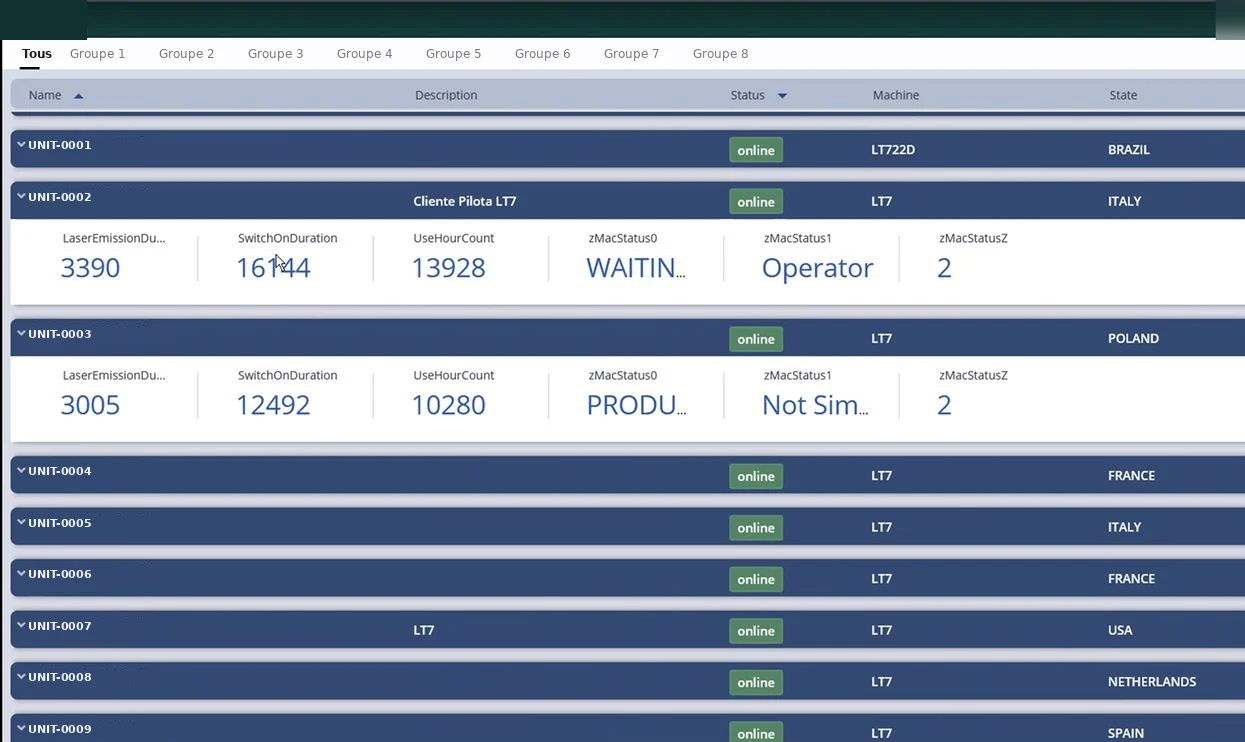
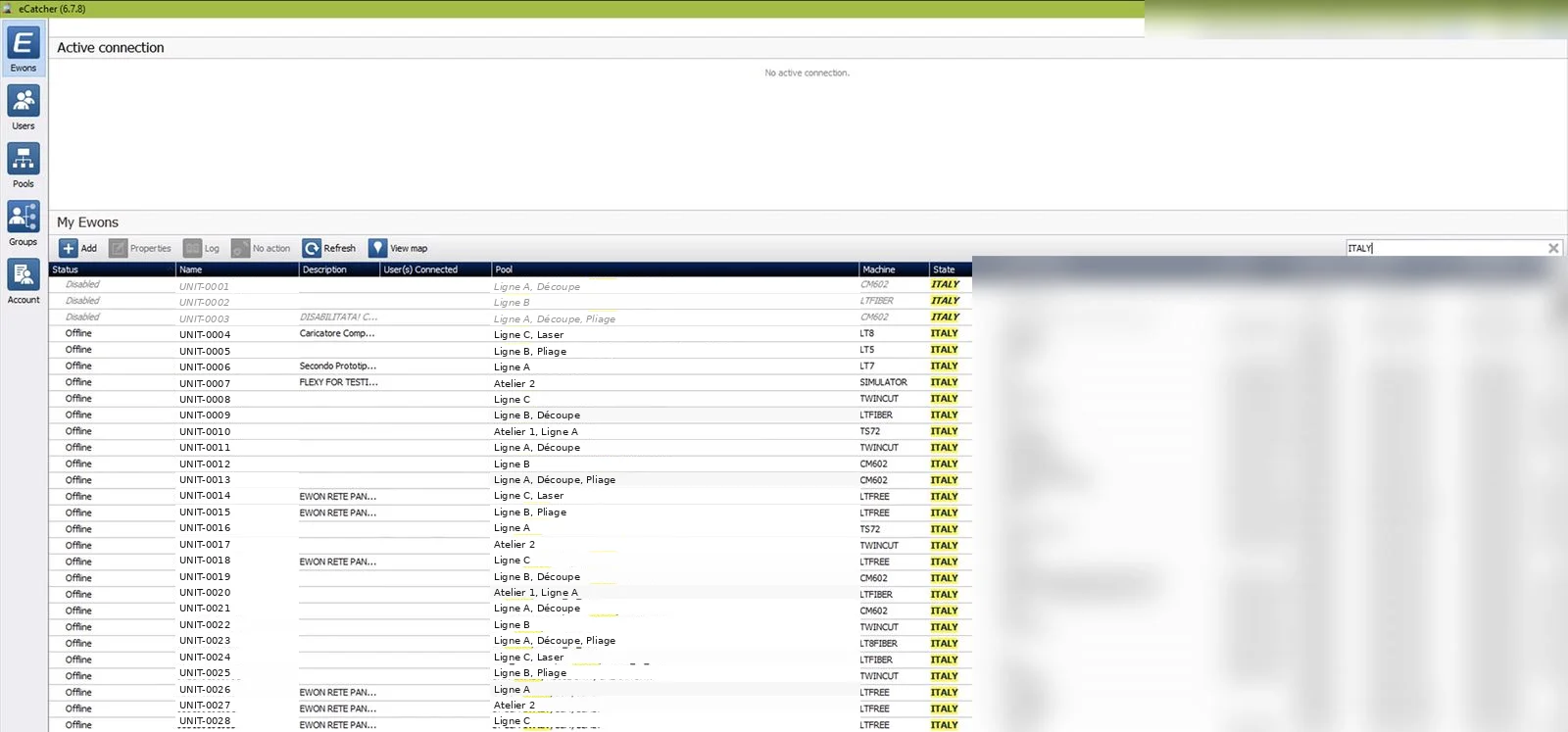
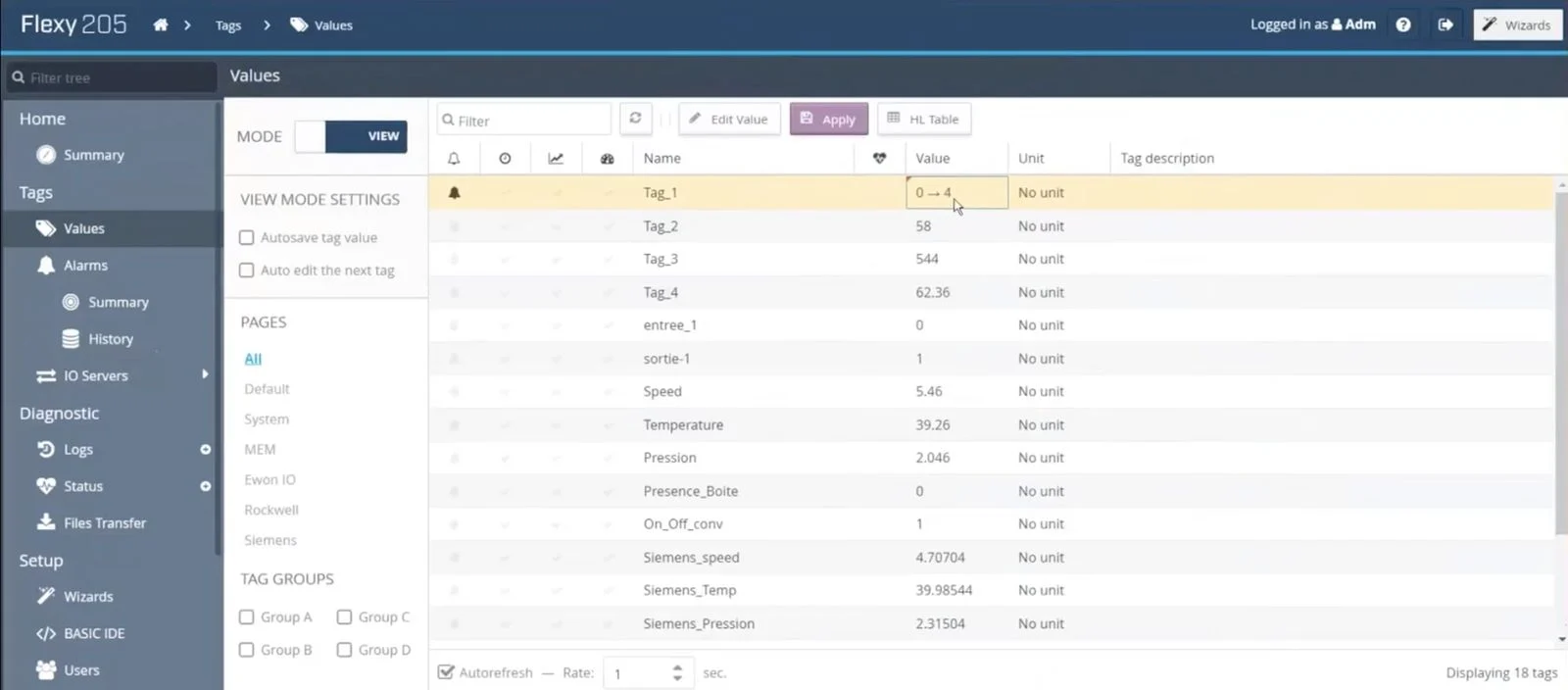
Three technical tools, built without design or a cloud approach

Before mapping the customer journey, I laid out the three existing tools. They all came from an organisation of engineers, with no design function and no user research, which made them far from intuitive. None of them took a cloud approach: configuration happened on the hardware itself and access ran through software you had to install, while the competitor Ixon, which arrived later with a cloud-native approach, was pulling ahead on usability.

These three screenshots come from the real working environment of the time. Client and user names, IP addresses and serial numbers have been masked. Move from one screen to the next using the arrows.
05

The customer journey built in workshops exposes the breaks between the three tools

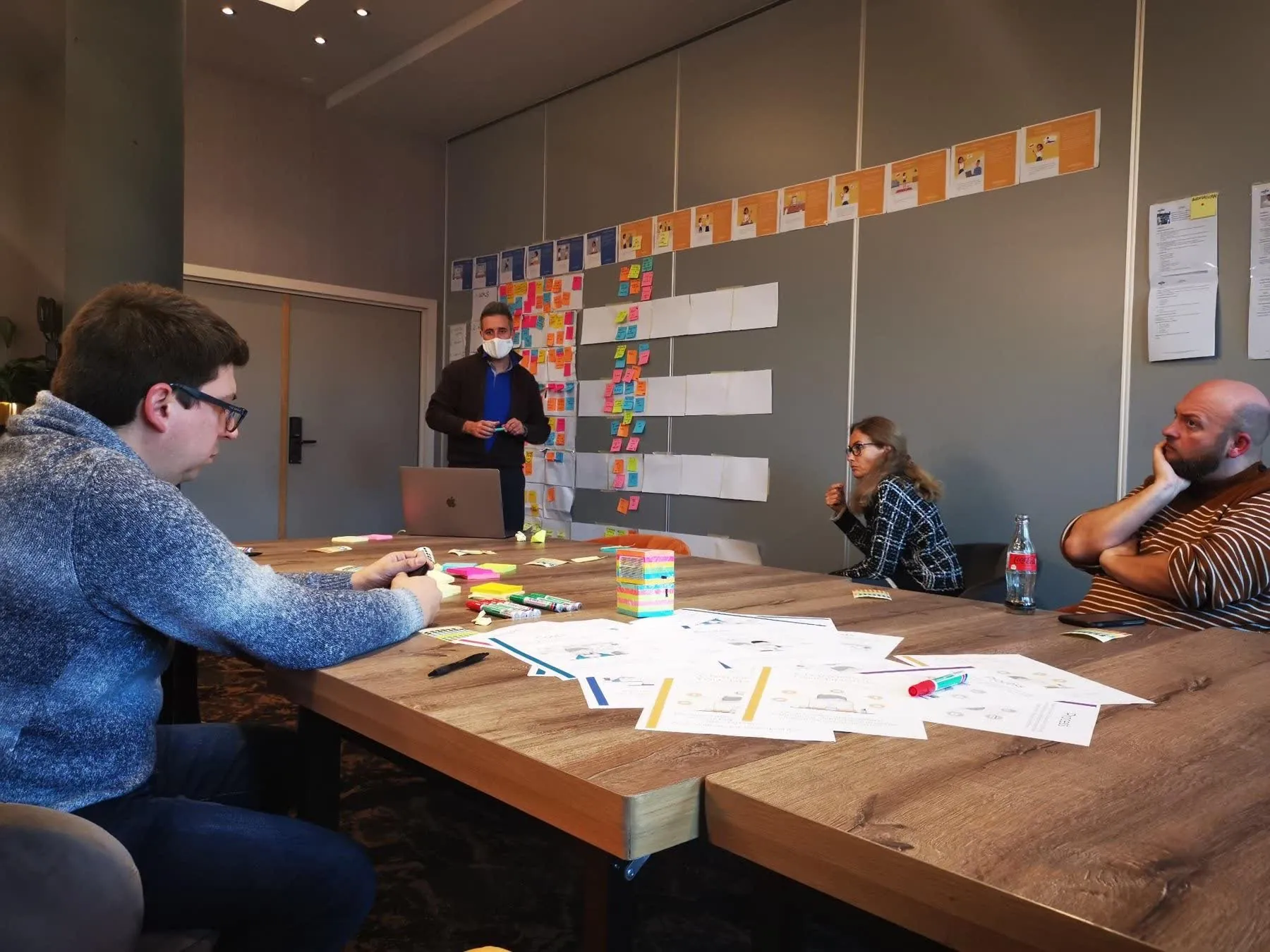
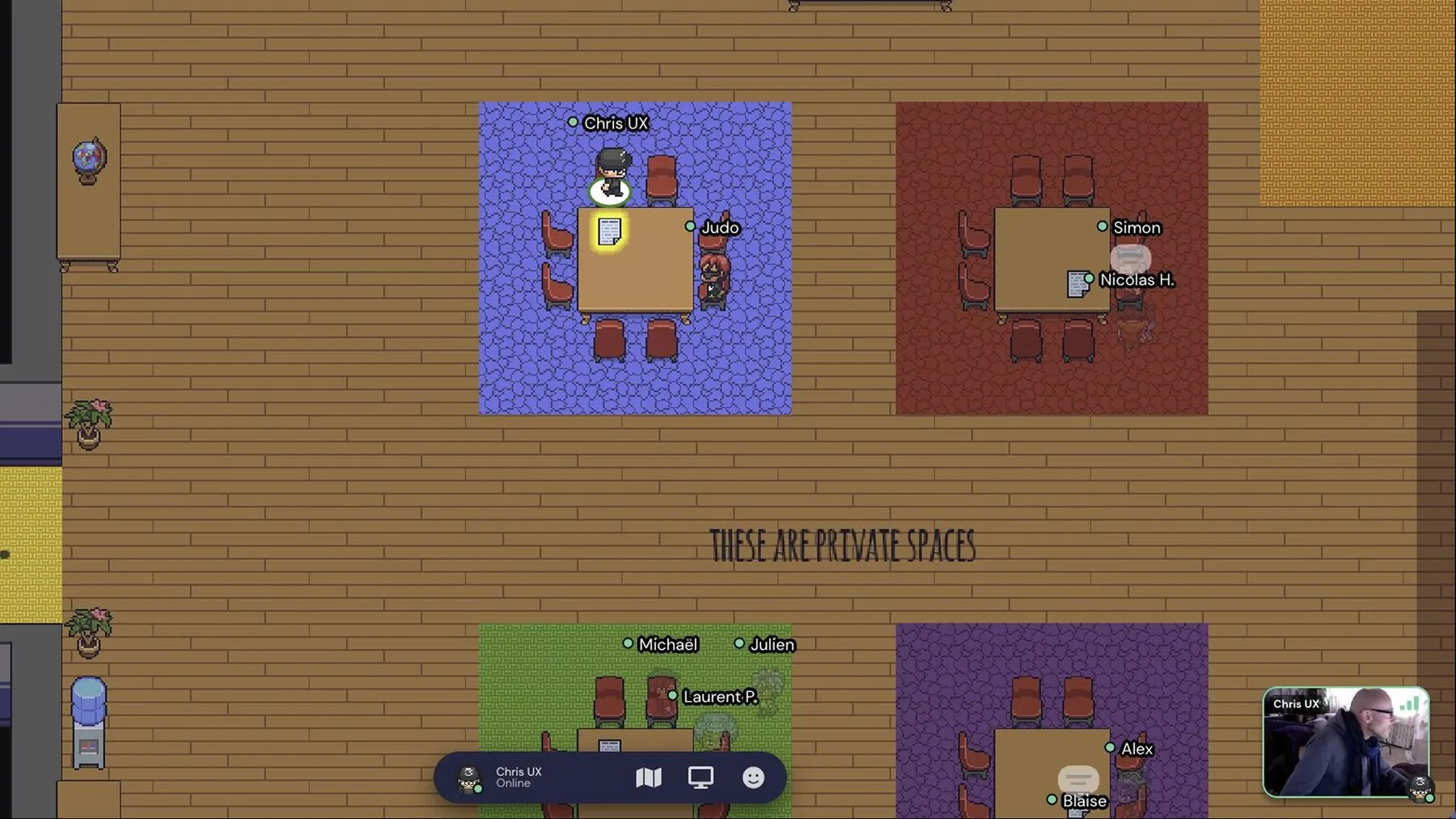
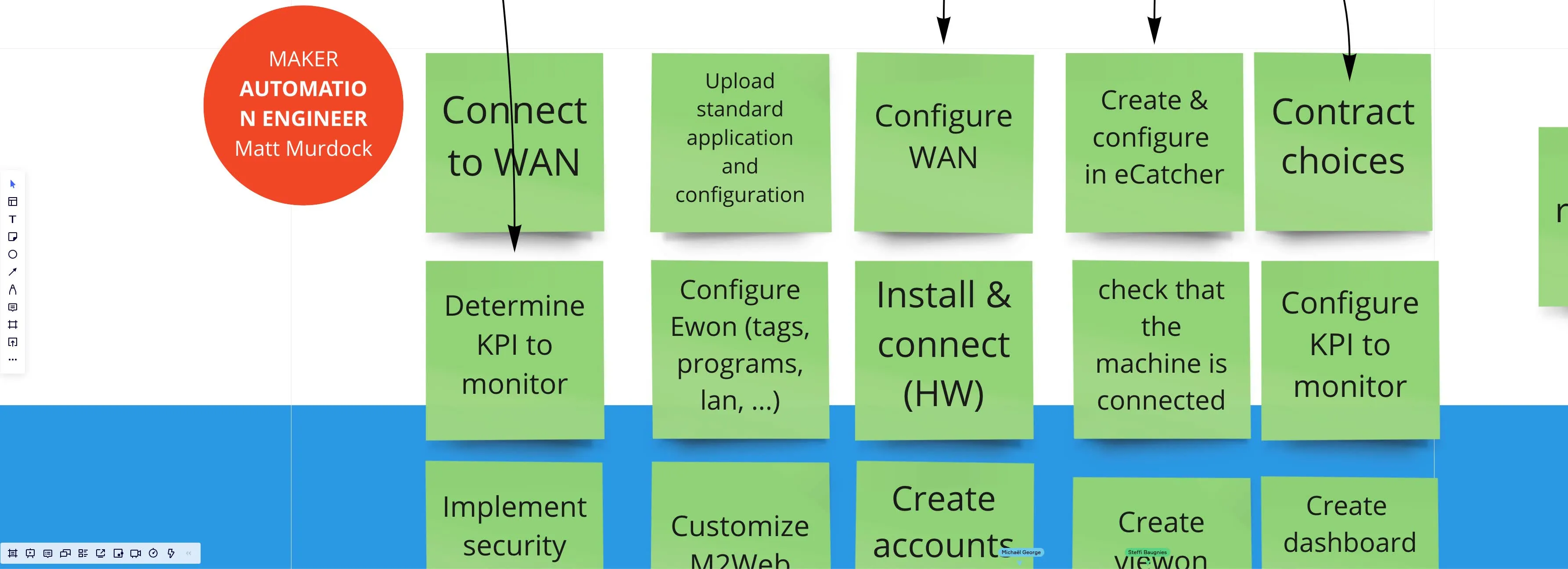
I built the customer journey with every team involved, across six workshops held both in person and remotely during covid: Gather.town served as the virtual office and Miro as the shared wall. The sessions covered the whole journey, from awareness to loyalty, from the overall path down to the detail of each step. Every friction point was pinned down by the person who experienced it, from the field technician to the plant manager.

Ten pain points emerged, the most significant being three separate logins, tunnels dropping without warning and no overview of the fleet.

These screenshots document the six customer journey workshops, run both in person and remotely, which covered the whole journey from awareness to loyalty. On one of the screenshots, personal data and internal working links have been masked. Click an image to enlarge it, then navigate with the arrows.
06

The concept merges three ageing platforms into a single experience

The value proposition brought eCatcher, M2Web and Talk2M behind a single entry, with onboarding tailored to each type of use.

It came out of the co-creation workshops, at the table where each department recognised its customer.

I refined it daily with the functional analysts and the product team, who anchored every choice in feasibility, and with the after-sales service, who heard from clients every day. The clients themselves validated each iteration during the tests.

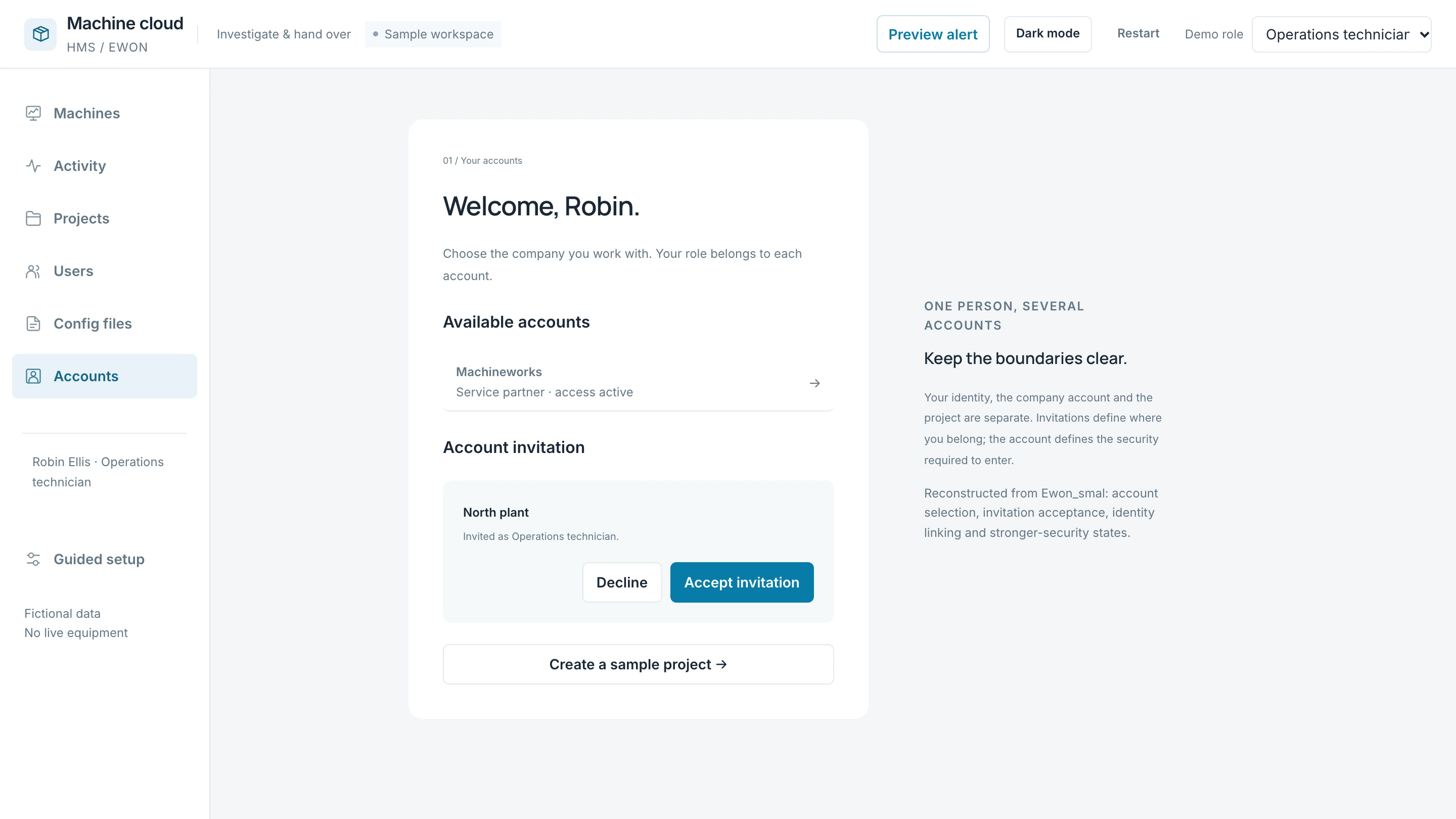
The personas determined the entry points, the level of information and the onboarding journeys. In practice, the manager sets up the account and then invites each person, specifying their function: the network engineer who configures access, the operating engineers who set the KPIs and alerts. Each person then starts in a path built around their own job, with only the functions that are useful to their role, without being swamped by features they do not need. Freed from the noise of the other roles, they concentrate more easily on their tasks. Access to a complex ecosystem becomes more pleasant and more relevant as a result.

Pain pointProduct decision
Three separate logins, three platformsA single entry point: eCatcher, M2Web and Talk2M brought together
Tunnels that dropped without warningKPIs and alerts configurable per machine
No overview of the fleetMonitoring and an activity dashboard for the entire fleet
Configuration on the hardware, software to installA SaaS accessible from the browser, with a demo account that requires no hardware
Each profile faced with the functions of every roleAn onboarding flow and an environment per persona
Every decision in the concept responds to a pain point documented during the research.
07

The prototypes, tested persona by persona, secure €2M for production

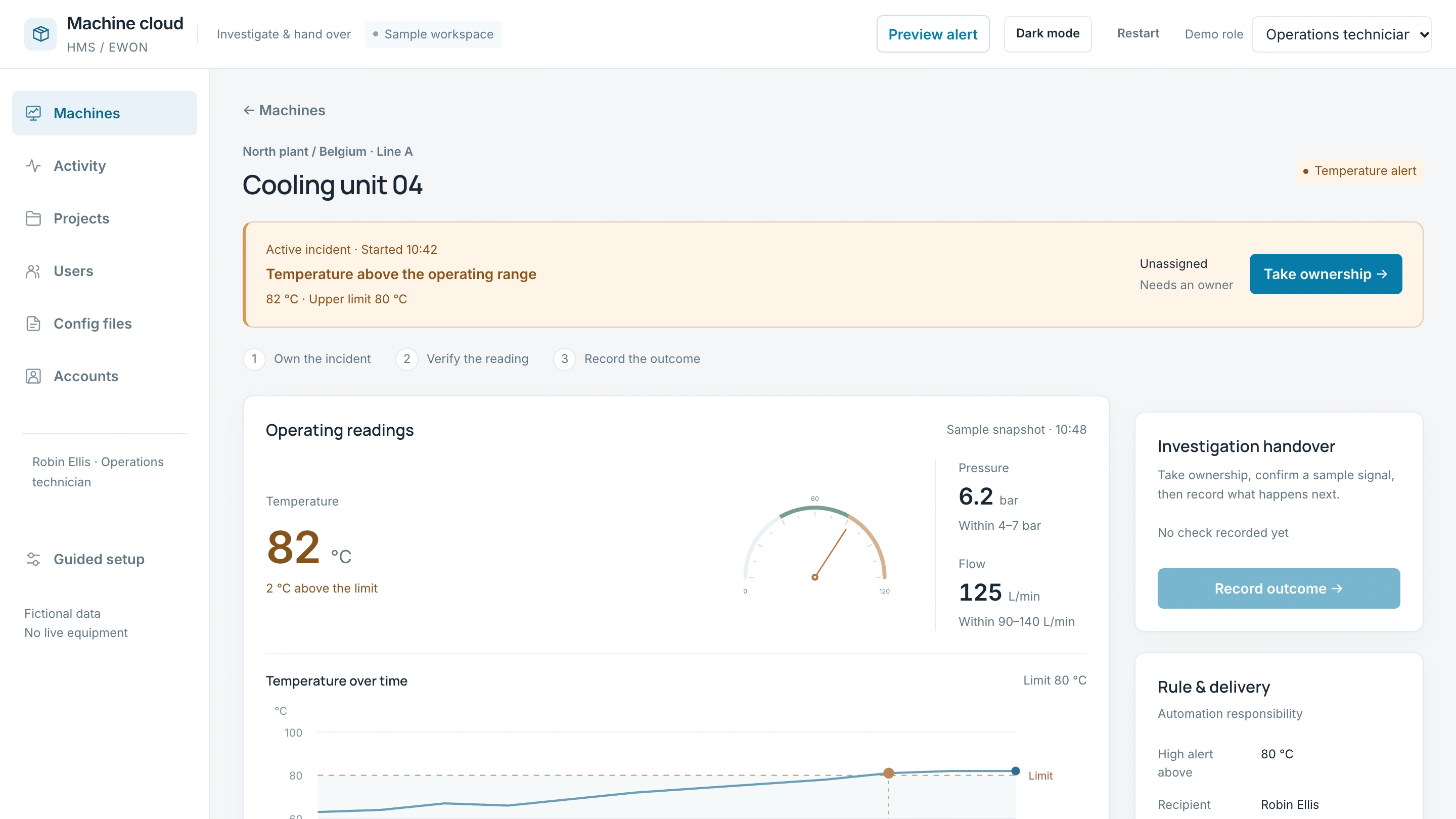
I built the complete SaaS in Figma, backed by a design system: the distinct onboarding per persona, administration, monitoring and billing, down to the instant demo account. Tested with international clients and scored flow by flow, the prototypes made the trade-offs defensible.

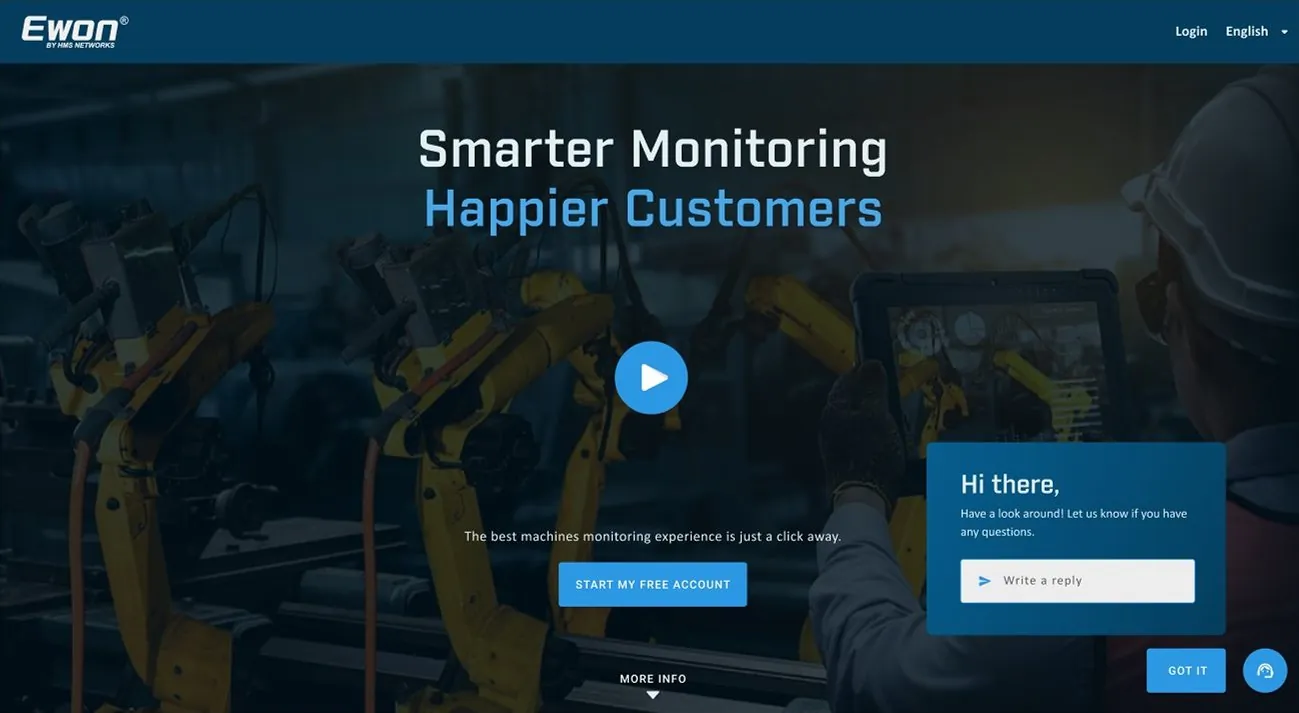
I had the home page start with a short context-setting video, followed by direct access to a guided demonstration that walks through the whole solution in five minutes. The tour advances step by step, in a logical order, and a chat window stays open to answer each question the moment it arises. Entry runs through the lightest possible sign-up, which removes friction while collecting the opt-in that marketing can use.

The sponsor took the Concept Report, prioritised through story mapping and accompanied by the production-ready design system, to the management board. He secured the funding for the move into production and was then promoted.

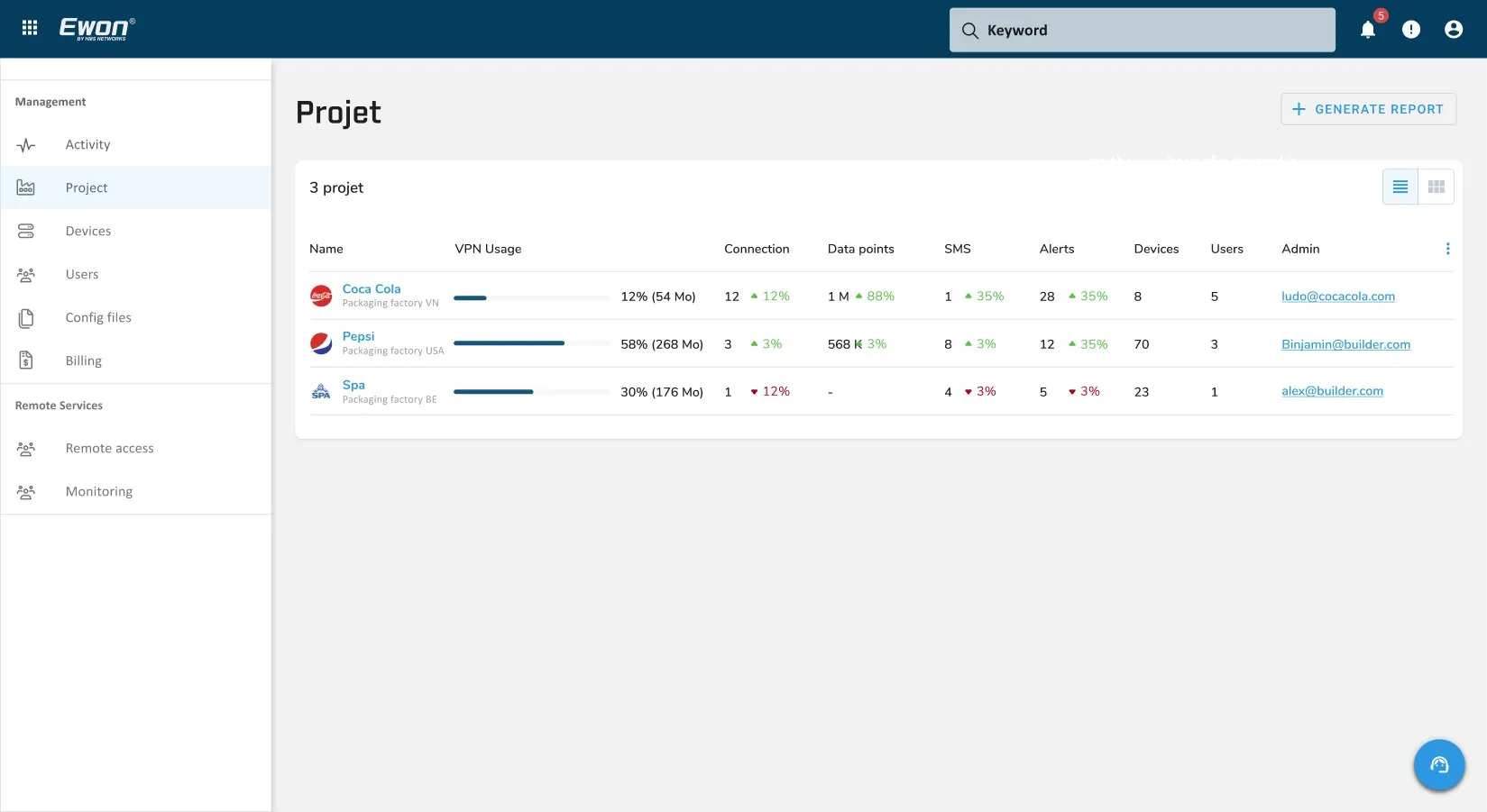
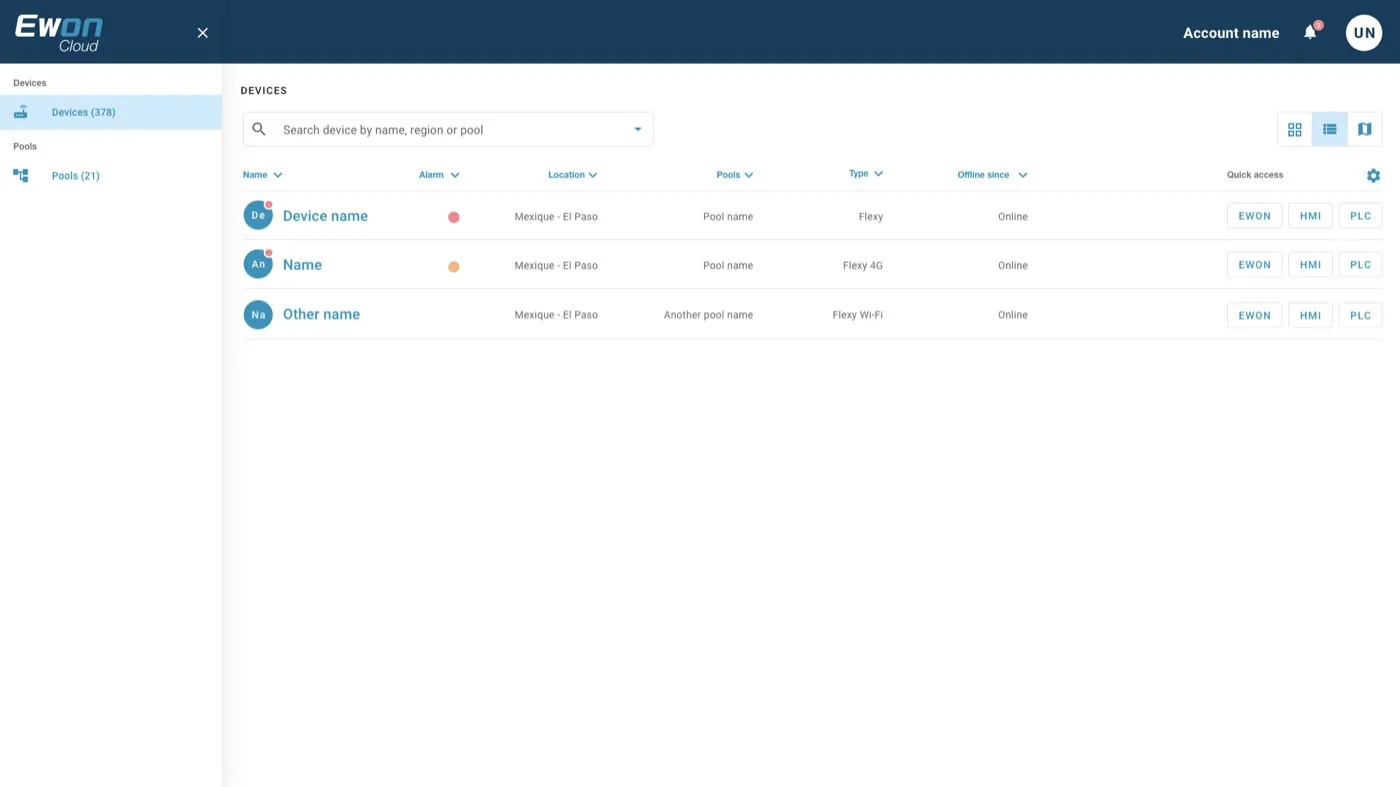
The final screens, as tested by the pilot clients.

Open the prototype in Figma

A similar challenge on your side?

For an engagement or an interview, write to me.

hello@christophevanengelen.com View my LinkedIn profile

I reply within 24 business hours.